Why a Supplement With Solid Research Behind It Can Still Do Nothing for a Given Person
A supplement backed by genuinely solid, well-replicated research can still produce absolutely no noticeable effect for a specific person taking it exactly as directed, and that outcome doesn’t mean the research was wrong or the product was low quality — it usually means the research was measuring something different than what any one individual should actually expect.

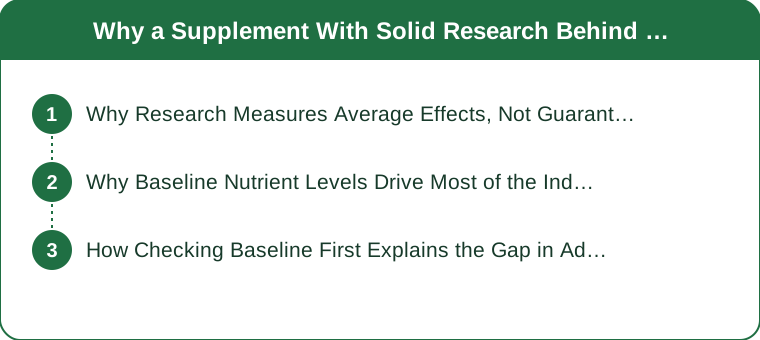
Why Research Measures Average Effects, Not Guaranteed Ones
The measure: most-supplement-research-reports-an-average-effect-across-a-large-study-group-a-number-that-describes-the-group-as-a-whole-rather-than-guaranteeing-any-individual-result (most supplement research reporting an average effect measured across an entire large study group, a number that genuinely describes that group as a whole, rather than guaranteeing the exact same result for any single individual within it, per the how-to-choose-quality-supplements-guide logic — most-supplement-research-reporting-an-average-effect-measured-across-an-entire-large-study-group-a-number-that-describes-the-group-as-a-whole-rather-than-guaranteeing-any-individual-result), and the reframe (a solid average effect being compatible with a wide individual range that includes zero)).

Why Baseline Nutrient Levels Drive Most of the Individual Response
The driver: a-persons-existing-baseline-level-of-the-relevant-nutrient-largely-determines-how-much-room-there-even-is-for-a-supplement-to-produce-a-measurable-additional-effect (a person’s existing baseline level of the specific nutrient in question largely determining how much actual room there even is for a supplement to go on and produce any measurable additional effect on top of it, per the omega-3-fish-oil-guide logic — a-persons-existing-baseline-level-of-the-relevant-nutrient-largely-determining-how-much-room-there-even-is-for-a-supplement-to-produce-a-measurable-additional-effect), and the frame (someone already near-sufficient having little room left to improve, no matter how solid the underlying research is)).
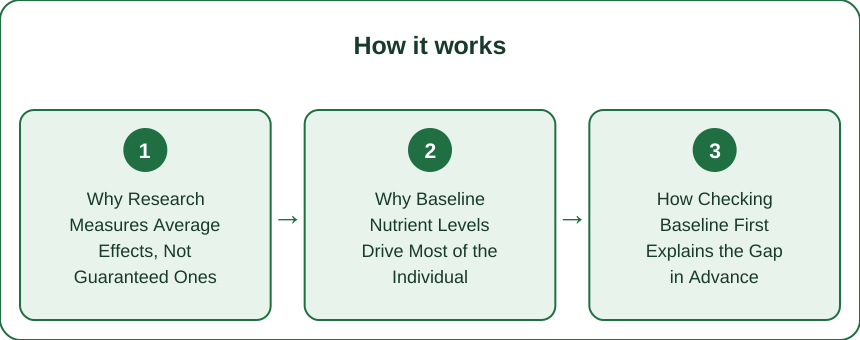
How Checking Baseline First Explains the Gap in Advance
The check: get-a-simple-baseline-blood-test-for-the-relevant-nutrient-before-starting-a-supplement-so-an-eventual-lack-of-effect-can-be-explained-by-baseline-rather-than-mistaken-for-a-failed-product (getting a simple baseline blood test for the relevant nutrient before ever starting a new supplement, so that an eventual lack of noticeable effect can be explained clearly by that baseline level, rather than mistaken entirely for a failed or low-quality product, per the supplement-timing-guide logic — getting-a-simple-baseline-blood-test-for-the-relevant-nutrient-before-starting-a-supplement-so-an-eventual-lack-of-effect-can-be-explained-by-baseline-rather-than-mistaken-for-a-failed-product), and the frame (a baseline number explaining a null result instead of leaving it a mystery).
Most supplement research reports an average effect across a large study group, a number that describes the group as a whole rather than guaranteeing any individual result, and a person’s existing baseline level of that nutrient largely determines how much room there is for a measurable additional effect. Getting a simple baseline blood test before starting a supplement explains an eventual lack of effect in advance, replacing a confusing null result with a clear reason rooted in where that person started.
Keep Reading
This article is for general informational purposes only and is not medical advice. Always consult a qualified health professional for guidance specific to you.