Why Supplement Label Claims Mean Less Than Third-Party Testing Certification
A supplement label listing exactly what’s inside doesn’t mean an independent party has actually confirmed that’s true, since supplements aren’t required to undergo the same pre-market verification medications do — which is why the certification mark on a bottle matters more than the ingredient list itself.

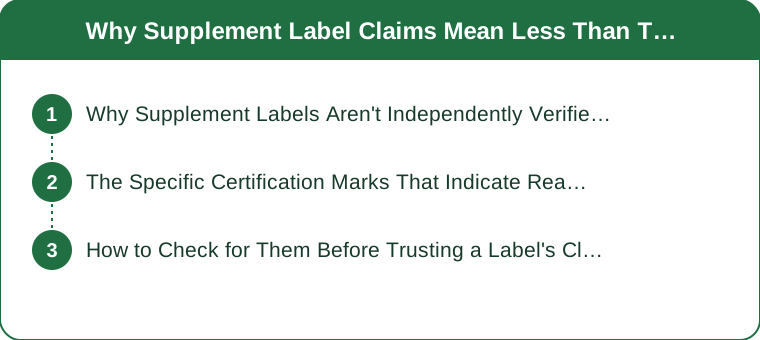
Why Supplement Labels Aren’t Independently Verified Before Hitting Shelves the Way Medications Are
The regulatory gap: the supplement-manufacturers-are-responsible-for-their-own-label-accuracy-without-mandatory-pre-market-verification (the the industry largely self-reporting contents rather than undergoing required independent confirmation before sale — the self-reported-labels-without-mandatory-verification), the the-studies-have-found-meaningful-mismatches-between-labeled-and-actual-ingredient-content-in-some-products (the real-world testing occasionally revealing gaps between what’s claimed and what’s actually in a product — the studies-find-label-content-mismatches), the the-a-clean-looking-label-with-specific-numbers-can-still-be-inaccurate-without-any-independent-check (the the appearance of precision and detail on a label providing no guarantee of accuracy on its own — the precise-looking-label-isnt-a-guarantee), and the reframe (a supplement label being a manufacturer’s claim rather than a verified fact, unless something else independently confirms it)).

The Specific Certification Marks That Indicate Real Testing
What to actually look for: the look-for-a-recognized-third-party-testing-seal-printed-directly-on-the-label (the specific, checkable certification marks from independent testing organizations rather than vague quality language — the look-for-recognized-testing-seal), the the-a-certification-mark-specifically-confirms-actual-content-matches-the-label (the the seal representing a real, independent check of ingredient accuracy rather than a general quality claim — the mark-confirms-actual-content-matches-label), the the-general-phrases-like-lab-tested-or-quality-assured-without-a-specific-named-certification-mean-little-on-their-own (the vague marketing language being distinct from and much weaker than an actual named certification — the vague-phrases-mean-little-without-named-certification), and the frame (a specific, recognized third-party certification seal being the actual signal that content matches the label, as opposed to vague quality language that provides no real verification).
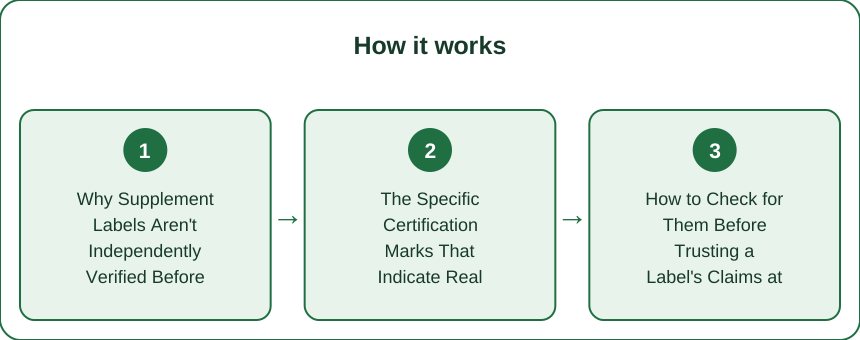
How to Check for Them Before Trusting a Label’s Claims at All
The practical check: the search-the-product-name-plus-third-party-tested-before-purchasing-to-confirm-certification-status (the doing a quick check rather than assuming certification based on the label’s general appearance — the search-before-purchase-to-confirm-certification), the the-check-the-certifying-organizations-own-website-for-the-product-if-a-mark-is-present (the verifying directly with the certifying body rather than trusting the mark’s presence alone — the verify-directly-with-certifying-organization), the the-treat-the-absence-of-any-certification-mark-as-a-meaningful-gap-not-a-neutral-detail (the a missing certification actively counting against a product’s verified accuracy rather than being a non-issue — the absence-of-certification-is-meaningful-not-neutral), and the frame (searching for certification status before buying, verifying directly with the certifying organization, and treating an absent mark as meaningful — a check that takes a few minutes and replaces trusting the label at face value).
A supplement label listing specific ingredients and amounts doesn’t mean an independent party has confirmed that’s actually accurate, since manufacturers largely self-report label contents without the mandatory pre-market verification medications require, and studies have occasionally found real mismatches between labeled and actual ingredient content even on precise-looking labels. What actually matters is a specific, recognized third-party testing seal printed on the label, which confirms an independent check that actual content matches what’s claimed — vague phrases like lab tested or quality assured without a named certification mean very little on their own. Check for that certification before trusting any label by searching the product name plus third-party tested before purchasing, verifying directly with the certifying organization’s own website if a mark is present, and treating the absence of any certification as a meaningful gap rather than a neutral detail.
Keep Reading
This article is for general informational purposes only and is not medical advice. Always consult a qualified health professional for guidance specific to you.