Supplement Timing: What Actually Needs a Schedule and What Just Needs Consistency
Supplement timing anxiety sells pill organizers with hourly slots — while the science says most supplements care about consistency, a few care about food, and almost none care about the clock. The timing guide: the rankings, the schedule and the interactions.

The Timing-Sensitivity Rankings
What actually cares when: the timing-matters tier (the iron’s empty-stomach-and-vitamin-C preferences from the iron doctrine — the coffee-and-calcium spacing being genuinely important; the fat-soluble vitamins D-A-E-K wanting a meal WITH fat: the absorption chemistry per the vitamin-D doctrine; the magnesium’s evening convention being tradition-plus-mild-logic per the magnesium doctrine), the consistency-matters tier (the creatine caring about DAILY, not when — the saturation model from the creatine doctrine; the timing debates being noise against the every-day signal; the multivitamins likewise: the taken-daily beating the taken-optimally), the with-food-for-comfort tier (the zinc-and-fish-oil nausea prevention — the stomach-comfort rule being practical, not biochemical), and the mostly-myth tier (the protein’s anabolic-window softness from the timing doctrine — the pre-bed casein’s modest case; the elaborate hourly schedules serving the organizer industry, not the body per the myths doctrine).

The Practical Schedule
The simple daily map: the breakfast cluster (the vitamin D and fish oil WITH the meal’s fat — the multivitamin here for the habit anchor per the stacking doctrine; the creatine whenever, so here works), the iron exception (the iron away from the cluster — the empty-stomach morning or the between-meals slot with vitamin C; the coffee spaced two hours per the iron doctrine; the alternate-day protocols from the iron doctrine), the evening slot (the magnesium’s wind-down tradition from the magnesium doctrine — the sleep-stack simplicity), the anchor principle (the supplements bolted to existing meals-and-rituals — the memory problem solved by stacking, not scheduling per the habit doctrine; the pill organizer earning its place as a DID-I-take-it tool, not an hourly scheduler), the missed-dose protocol (the skipped day shrugged and resumed — the doubling-up declined; the consistency-over-perfection law per the flexibility doctrine), and the minimalism reminder (the fewer-supplements-taken-reliably beating the elaborate stack — the actually-needed list from the supplement doctrine; the timing question mattering less than the whether question).
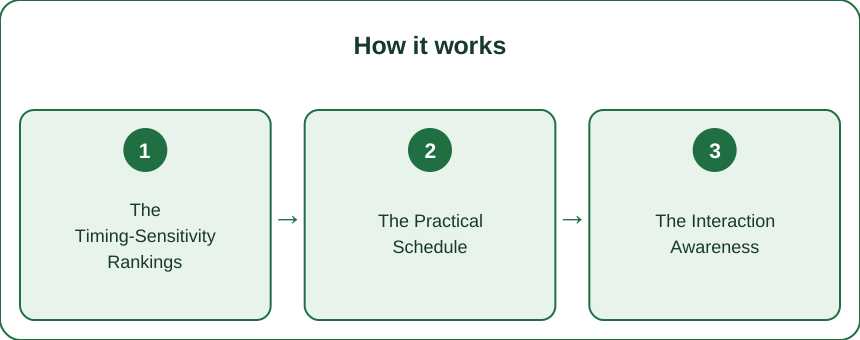
The Interaction Awareness
The spacing that matters: the mineral competition (the iron-calcium-zinc absorption rivalry — the high-dose minerals spaced from each other; the multivitamin’s modest doses mostly coexisting), the coffee-and-tea factor (the tannins-and-iron interaction from the iron doctrine — the morning-coffee-plus-iron being the classic self-sabotage), the medication layer (the supplement-drug interactions being the REAL timing issue — the thyroid medication’s empty-stomach-and-spacing rules; the pharmacist review of the full list per the medical doctrine; the blood-thinner-and-fish-oil conversations), the fiber-and-fat notes (the fiber supplements spaced from medications — the fat-soluble vitamins wasted on fat-free meals), the label-reading habit (the with-food-or-without instructions honored — the manufacturer’s line being the floor per the label doctrine), and the closing frame (the timing right-sized to three rules — the fat-solubles with fatty meals, the iron alone with C, the everything-else daily-and-anchored; the hourly organizer retired; the consistency, crowned; the pharmacist, consulted once about the real interactions). Fat-solubles with breakfast, iron alone, everything else just daily: the clock, mostly ignored.
Three rules cover it: fat-soluble vitamins (D, fish oil) with a meal containing fat, iron alone with vitamin C and two hours from coffee or calcium, everything else — creatine included — just needs DAILY. Anchor doses to existing meals, shrug missed days, and save the timing worry for medication interactions your pharmacist should review.
Keep Reading
This article is for general informational purposes only and is not medical advice. Always consult a qualified health professional for guidance specific to you.