Why Two Supplements That Work Alone Can Cancel Each Other Out Together
Quick Answer: Some supplements compete for the same absorption pathway in your gut, so taking them at the same time means your body can only fully absorb one — the other passes through largely unused. Spacing competing supplements by 2-4 hours lets both actually work as intended.
Each pill did its job in whatever study proved it works. What the label doesn’t say is that it was tested alone, not stacked with your other four supplements taken at the same breakfast.

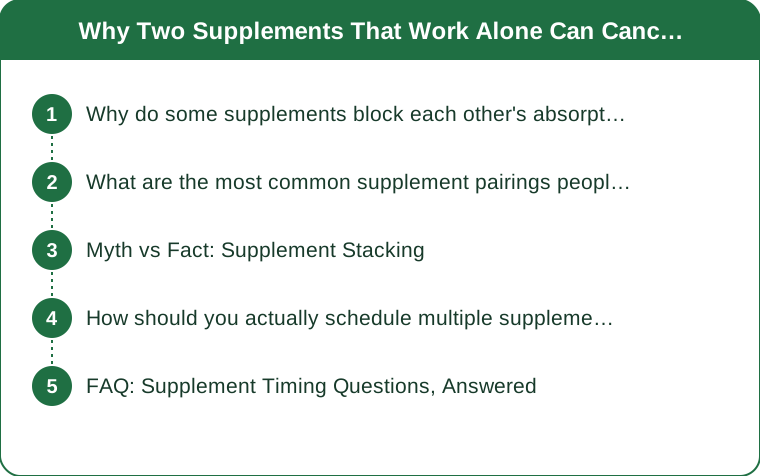
Why do some supplements block each other’s absorption?
Certain minerals share the same transport proteins in your intestinal lining, and those transporters can only move a limited amount of material at once. Calcium and iron are a classic example — both compete for overlapping absorption pathways, and taking them together can reduce iron absorption significantly compared to taking them hours apart.
This isn’t a toxicity issue, just a bottleneck — your body absorbs whichever one gets there in higher concentration or arrives first, and the other largely passes through.
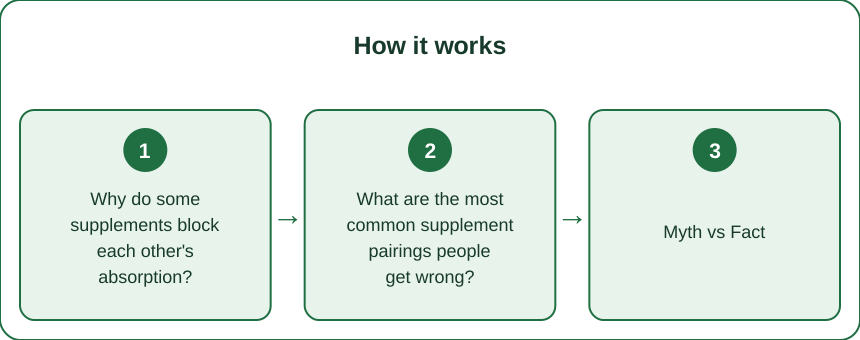
What are the most common supplement pairings people get wrong?
Calcium and iron — space by at least 2 hours, ideally take iron on an empty stomach separately. Zinc and copper — high-dose zinc over time can reduce copper absorption, relevant mainly for people on sustained high-dose zinc. Magnesium and calcium — both can compete for absorption at high doses, though this matters less than iron-calcium since the effect is milder.
Fat-soluble vitamins (A, D, E, K) are the exception that actually benefits from grouping — they’re better absorbed together with a meal containing some fat, unlike the mineral pairs above.

Myth vs Fact: Supplement Stacking
Myth: More supplements at once means more total benefit. Fact: Beyond a certain point, competing absorption pathways mean adding more pills in the same dose can reduce the effectiveness of what you’re already taking, not add to it.
Myth: If a supplement doesn’t cause a bad symptom, it’s being absorbed fine. Fact: Poor absorption due to competition is silent — no symptom, just reduced effectiveness that shows up as ‘this supplement isn’t doing anything for me’ rather than any obvious sign.
Myth: Timing supplements only matters for prescription medication interactions. Fact: Mineral-mineral competition is a real, well-documented absorption issue independent of any medication — it applies to over-the-counter supplement stacking too.
How should you actually schedule multiple supplements?
Group fat-soluble vitamins with a meal together. Take competing minerals (iron, calcium, zinc, magnesium) at separate times spaced 2-4 hours apart — for example, iron first thing on an empty stomach, calcium with dinner.
If you’re taking more than 3-4 supplements regularly, writing out a simple two-slot daily schedule (morning / evening) sorted by which ones compete is worth the five minutes — most competing pairs just need to land in different slots, not a complicated protocol.
FAQ: Supplement Timing Questions, Answered
Does this apply to supplements from a multivitamin too?
Multivitamins are formulated with these interactions partly considered, but adding a separate high-dose mineral supplement on top of a multivitamin can still recreate the same competition issue.
How do I know if my current stack has a competing pair?
Check iron, calcium, zinc, and magnesium doses across everything you take — if two of these appear in the same dose or timing, that’s the most common pairing worth separating.
Should I check with a doctor or pharmacist about my specific supplement combination?
Yes, especially if you’re taking multiple supplements alongside prescription medication — a pharmacist can flag both mineral-mineral and medication interactions in one pass. This is general information, not medical advice.
TL;DR:
- Some minerals share absorption pathways and compete when taken together, reducing effectiveness of one or both
- Iron and calcium is the most common conflicting pair — space by 2+ hours
- Fat-soluble vitamins (A, D, E, K) are the exception — group these with a meal
- Sort your supplements into a simple morning/evening schedule based on which ones compete
Poor absorption from stacking is silent — if a supplement ‘isn’t doing anything,’ check what else you’re taking alongside it before assuming the supplement itself is the problem.
Keep Reading
This article is for general informational purposes only and is not medical advice. Always consult a qualified health professional for guidance specific to you.