Taking Supplements on an Empty Stomach vs With Food Changes Absorption More Than You'd Think
Quick Answer: Fat-soluble vitamins (A, D, E, K) and many minerals absorb significantly better taken with a meal containing some fat. Water-soluble vitamins (most B vitamins, vitamin C) absorb well regardless, and some supplements like iron actually absorb worse with certain foods.
Popping the whole daily stack at once, empty stomach, before coffee, is convenient — but for several common supplements it’s quietly cutting their effectiveness by a meaningful margin.

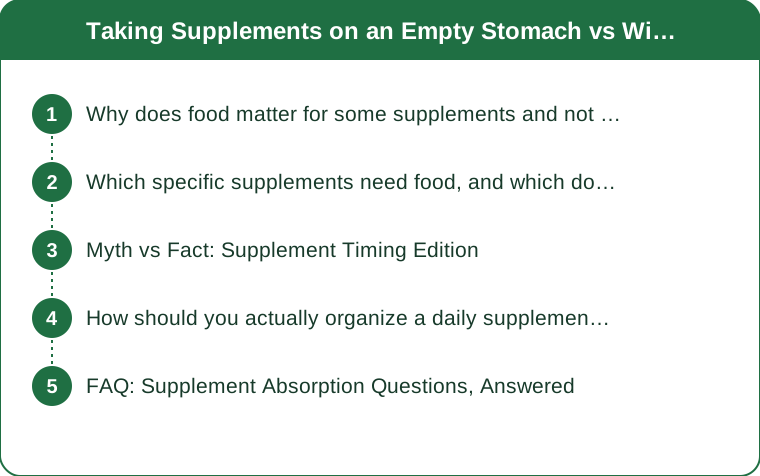
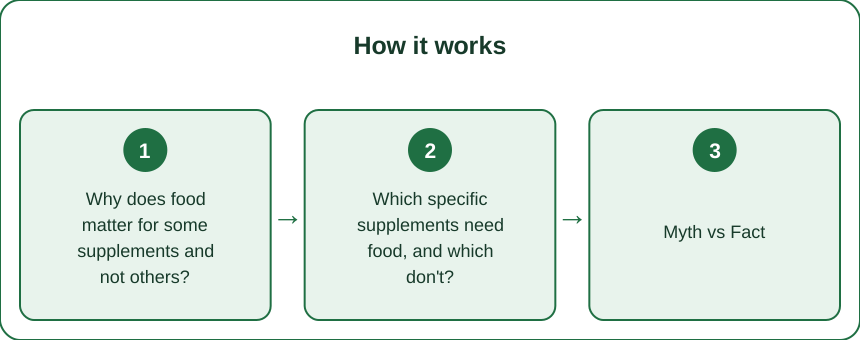
Why does food matter for some supplements and not others?
Fat-soluble compounds (vitamins A, D, E, K, and some plant compounds like curcumin) require dietary fat present in the gut to form the micelles needed for absorption — without it, a large portion passes through largely unabsorbed.
Water-soluble vitamins (B-complex, vitamin C) don’t need this fat-based absorption pathway, so food timing matters far less for them.
Which specific supplements need food, and which don’t?
Need food with fat: vitamin D, vitamin E, vitamin K, omega-3s, CoQ10, curcumin/turmeric extracts.
Don’t require food: most B vitamins, vitamin C, magnesium glycinate (though some people prefer it with food to reduce mild stomach upset).
Actually absorb better away from food: iron absorbs best on an empty stomach or with vitamin C, since calcium and certain compounds in food can block iron uptake.

Myth vs Fact: Supplement Timing Edition
Myth: All supplements are equally effective any time of day. Fact: For fat-soluble vitamins specifically, taking them with a fat-free breakfast (black coffee, dry toast) can significantly reduce absorbed amount compared to taking them with a meal containing healthy fats.
Myth: Taking iron with your multivitamin is efficient. Fact: Calcium in a multivitamin can compete with and reduce iron absorption — separating them by a few hours is generally recommended if iron is a specific concern.
Myth: More water with supplements always helps absorption. Fact: Water helps with swallowing and general hydration, but it doesn’t create the fat-based absorption pathway that fat-soluble vitamins specifically need.
How should you actually organize a daily supplement stack?
Take fat-soluble vitamins and omega-3s with your largest meal of the day that includes some dietary fat. Take iron separately from calcium-containing supplements or dairy, ideally with a vitamin C source to boost absorption.
Water-soluble vitamins are flexible — fit them wherever’s convenient in your routine.
FAQ: Supplement Absorption Questions, Answered
Does it matter which meal I take fat-soluble vitamins with?
Not specifically which meal, just that it contains some dietary fat — a completely fat-free meal won’t support absorption regardless of time of day.
Can I take all my supplements at once if I’m short on time?
You can, but separating iron from calcium/dairy sources by a couple hours is worth the small effort if iron levels are a specific concern for you.
Is it bad to take supplements on an empty stomach in general?
Not inherently — some people experience mild stomach upset with certain supplements on an empty stomach, which is a comfort issue more than an absorption issue for water-soluble types. This is general information, not medical advice.
TL;DR:
- Fat-soluble vitamins (A, D, E, K) need dietary fat present to absorb well
- Water-soluble vitamins (B, C) absorb fine regardless of food timing
- Iron absorbs better away from calcium/dairy, ideally with vitamin C
- Organize your stack: fat-solubles with a fatty meal, iron separately
Check your stack tonight — the fix might just be moving one pill to breakfast instead of taking it dry.
Keep Reading
This article is for general informational purposes only and is not medical advice. Always consult a qualified health professional for guidance specific to you.