Does Taking Supplements on an Empty Stomach Actually Absorb Better?
Quick Answer: Fat-soluble vitamins (A, D, E, K) and many minerals actually absorb better with food, especially food containing some fat — empty-stomach timing is really only necessary for a small number of specific supplements. Check your specific supplement rather than defaulting to empty stomach for everything.
You’ve taken your multivitamin on an empty stomach every morning for years because that’s just what you assumed was correct. For several nutrients in that pill, food would actually help you absorb more of it, not less.

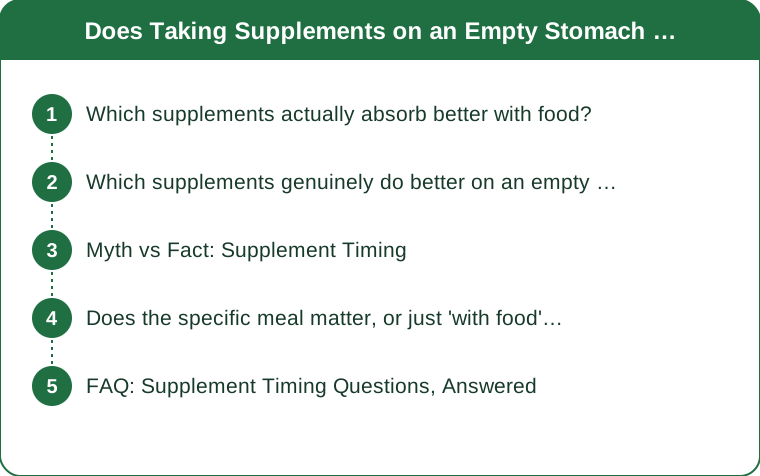
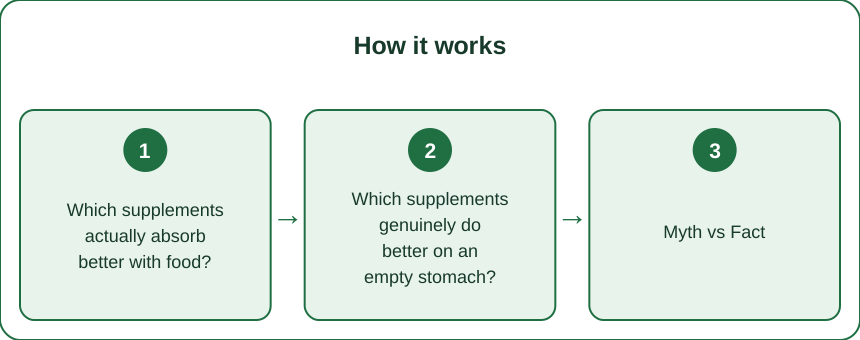
Which supplements actually absorb better with food?
Fat-soluble vitamins — A, D, E, and K — require dietary fat to be properly absorbed into the bloodstream, so taking them on a completely empty stomach can significantly reduce how much your body actually uses, regardless of the dose on the label. This is one of the most common and impactful timing mistakes people make.
Iron and magnesium also tend to cause less stomach upset when taken with food, even though iron absorption is technically highest on an empty stomach — for many people, the empty-stomach nausea trade-off isn’t worth the modest absorption gain.
Which supplements genuinely do better on an empty stomach?
Some specific supplements — like certain thyroid medications and a few amino acid supplements — do have genuine empty-stomach absorption advantages, since food components can interfere with their specific uptake pathway. This is a smaller list than most people assume, and it’s worth checking specifically rather than assuming all supplements fall into this category.
The common advice to take ‘everything first thing in the morning’ likely comes from generalizing these few exceptions to every supplement, which isn’t accurate for fat-soluble vitamins or minerals.

Myth vs Fact: Supplement Timing
Myth: empty stomach is the universal best practice for supplements. Fact: it depends entirely on the specific nutrient — fat-soluble vitamins and several minerals absorb better with food, while only a smaller subset of supplements benefit from empty-stomach timing.
Myth: taking supplements with food cancels their effectiveness. Fact: for most vitamins and minerals, food doesn’t cancel absorption — it often meaningfully improves it, particularly when the food contains some fat.
Does the specific meal matter, or just ‘with food’ in general?
For fat-soluble vitamins specifically, the meal needs to contain some dietary fat — even a small amount, like eggs, nuts, or added oil — to meaningfully improve absorption; a completely fat-free meal (like plain black coffee and dry toast) won’t provide the same benefit. This is a detail most supplement labels don’t explain clearly, even when they say ‘take with food.’
For water-soluble vitamins (like most B vitamins and vitamin C), the fat content of the meal matters much less, since they don’t rely on fat for absorption the way A, D, E, and K do.
FAQ: Supplement Timing Questions, Answered
Should I take my multivitamin with breakfast or on an empty stomach?
With a meal containing some fat, generally — this improves absorption of the fat-soluble vitamins most multivitamins include.
Does taking iron with food really reduce how much I absorb?
Somewhat, yes, but the reduction is often a reasonable trade-off for avoiding stomach upset, especially for ongoing daily use.
How do I know if my specific supplement needs empty-stomach timing?
Check the product label or ask a pharmacist — it’s a smaller category than commonly assumed, and defaulting to ‘with food and some fat’ is a safer general rule for most vitamins and minerals.
TL;DR:
- Fat-soluble vitamins (A, D, E, K) absorb significantly better with some dietary fat, not on an empty stomach
- Only a smaller subset of supplements genuinely benefit from empty-stomach timing
- Iron and magnesium cause less stomach upset with food, even with a small absorption trade-off
- Check your specific supplement rather than defaulting to empty-stomach for everything
This is general nutrition information, not medical advice — check with a pharmacist or doctor about your specific supplements and medications.
Keep Reading
This article is for general informational purposes only and is not medical advice. Always consult a qualified health professional for guidance specific to you.