Choosing a Protein Powder: The Types, the Quality Checks and the Honest Buying Guide
The protein powder aisle is a wall of claims over four basic products — whey, casein, plant blends and collagen — and choosing well is a ten-minute literacy exercise that saves years of mediocre tubs. The powder guide: the types, the checks and the value.
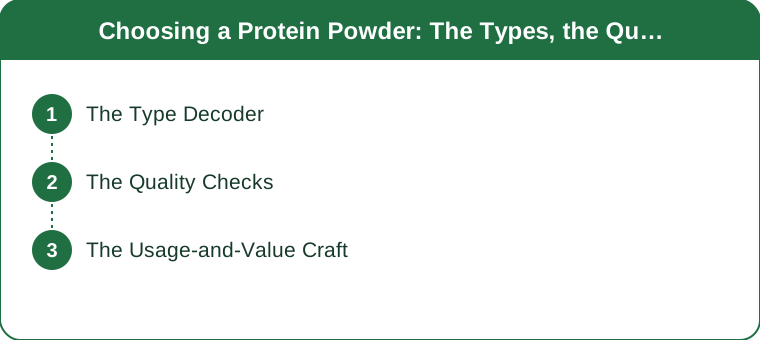
The Type Decoder
The four products: the whey standard (the fast-digesting complete protein — the mixability-and-taste champion; the concentrate-versus-isolate distinction: the isolate’s higher protein-and-lower-lactose at higher price; the lactose-sensitive leaning isolate per the gut doctrine), the casein option (the slow-digesting milk cousin — the thick blend and the bedtime-use tradition; the satiety tier from the satiety doctrine), the plant blends (the pea-rice combinations solving single-source amino gaps — the complete-blend check from the plant doctrine; the texture-and-taste improvements of the current generation; the soy’s complete-and-underrated status), the collagen clarification (the collagen NOT being a muscle-protein substitute — the amino profile missing the leucine threshold per the protein doctrine; the skin-and-joint claims being its separate, modest case; the tub bought knowingly per the honesty doctrine), and the matching guide (the whey for most, the isolate for the sensitive, the plant blend for the plant-based, the casein for the satiety-seekers — the goal-and-gut deciding per the individual doctrine).
The Quality Checks
Reading the tub: the protein-per-serving math (the 20-25 grams per scoop standard — the protein-per-100-grams comparison across brands: the fairest metric per the label doctrine), the ingredient-list audit (the short lists leading — the protein source first; the sugar check: the under-3-grams standard; the thickener-and-filler awareness: the tubs padded with gums), the third-party testing (the informed-sport and NSF certifications as the safety tier — the contaminant-and-label-accuracy verification; the certification mattering MORE for competitive athletes per the testing doctrine), the amino-spiking awareness (the added-glycine-and-taurine trick inflating protein numbers — the complete-protein sources named beating the amino alphabet), the artificial-sweetener preference call (the stevia-monk-fruit tier versus the sucralose standard — the taste-and-gut personal test per the preference doctrine), and the red-flag list (the proprietary blends hiding doses — the miracle claims from the marketing doctrine; the influencer-brand premium audited).
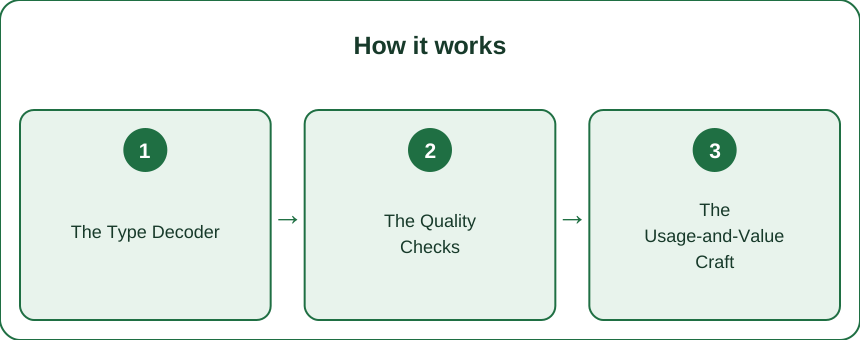
The Usage-and-Value Craft
Buying and using well: the role clarity (the powder as convenient food, not magic — the food-first doctrine; the gap-filler for the protein targets from the protein doctrine: the breakfast boost and the post-workout convenience), the dose honesty (the one-scoop servings against the daily total — the powder covering 20-40 grams of a 100-plus-gram day; the whole-food majority maintained per the food doctrine), the value mathematics (the price-per-20-grams-protein comparison — the big-bag economics; the sale-and-subscribe savings per the budget doctrine; the premium tubs buying flavor, not function, past the quality floor), the taste-testing strategy (the small tub FIRST — the flavor commitment after the trial per the trial doctrine; the vanilla’s mix-in versatility from the smoothie doctrine), the usage ideas beyond shakes (the oats, yogurt and baking integrations from the breakfast doctrine — the powder as an ingredient), the storage-and-freshness notes (the sealed-dry storage — the clumping honesty), and the closing frame (the aisle reduced to four products and five checks — the tub chosen on protein-per-serving, short ingredients and third-party testing; the marketing wall, walked past; the protein, conveniently powdered when food can’t reach). Twenty-plus grams a scoop, short list, tested seal: the tub, honestly chosen.
Four products under the marketing: whey (isolate if lactose-sensitive), casein for satiety, pea-rice blends for plant-based — and collagen is NOT muscle protein. Check 20-25g per scoop, short ingredient lists, under 3g sugar and third-party testing; compare price-per-20-grams and buy the small tub first for taste.
Keep Reading
This article is for general informational purposes only and is not medical advice. Always consult a qualified health professional for guidance specific to you.