The Magnesium Aisle Decoder: Glycinate, Citrate and the Alphabet Soup
Magnesium earned its shelf space — the sleep, muscle and regularity evidence is fair — but the aisle punishes the convinced: glycinate, citrate, oxide, threonate, each at different prices for ‘the same’ mineral. The suffixes are delivery systems with different jobs. The decoder.

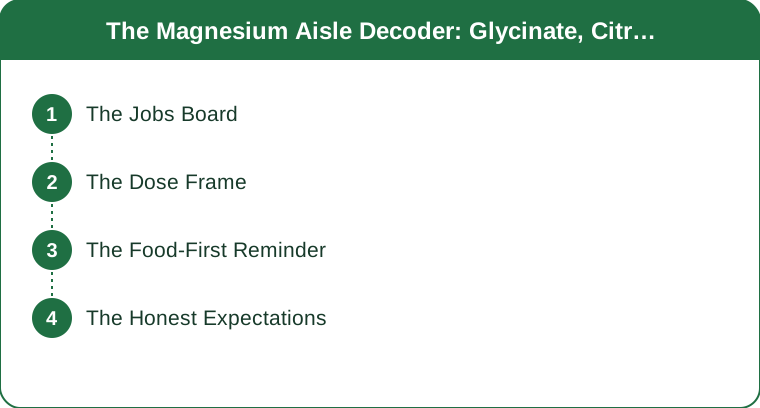
The Jobs Board
Match the suffix to the goal: GLYCINATE for sleep and relaxation (gentle on stomachs — the evening classic), CITRATE for regularity (the mild laxative lean is the feature), MALATE for daytime energy-adjacent use, THREONATE for the brain-research-curious (promising, pricey, early), and OXIDE for… almost nothing (poorly absorbed — the cheap bottle that made magnesium’s reputation inconsistent).
The Dose Frame
Supplemental doses run 200-400mg of elemental magnesium (the label’s fine print — ‘elemental’ is the number that counts), taken with food, evenings for the sleep-seekers. The too-much signal is unambiguous: digestive urgency — the mineral self-limits loudly. Kidney conditions move this to doctor-approval territory, non-negotiably.

The Food-First Reminder
The aisle’s forgotten competitor: pumpkin seeds, almonds, spinach, black beans, dark chocolate — the magnesium plate covers most gaps without a bottle (the modern-diet shortfall is real but food-fixable). The supplement serves the tested-low, the cramp-prone and the sleep-project — not the entire population the marketing addresses.
The Honest Expectations
What the evidence supports: modest sleep-quality improvements (strongest in the actually-deficient), muscle-cramp reduction (fair evidence, individual results), regularity (citrate’s lane). What it doesn’t: transformation. Magnesium is a supporting-cast mineral with a well-run aisle presence — cast it in the right role, at the right suffix, and it performs its modest part reliably.
Glycinate for nights, citrate for movement, skip the oxide, eat the pumpkin seeds. One mineral, eight costumes — the decoder just returns it to the supporting role it plays well.
Keep Reading
This article is for general informational purposes only and is not medical advice. Always consult a qualified health professional for guidance specific to you.