How to Choose Quality Supplements (and Avoid Wasting Money)
The supplement aisle is full of promises, and most of what is sold is either unnecessary or low quality. Knowing how to evaluate a supplement — and whether you even need it — saves money and protects your health. Here is why quality and need vary so much, how to evaluate a supplement, and how to decide if you actually need it.

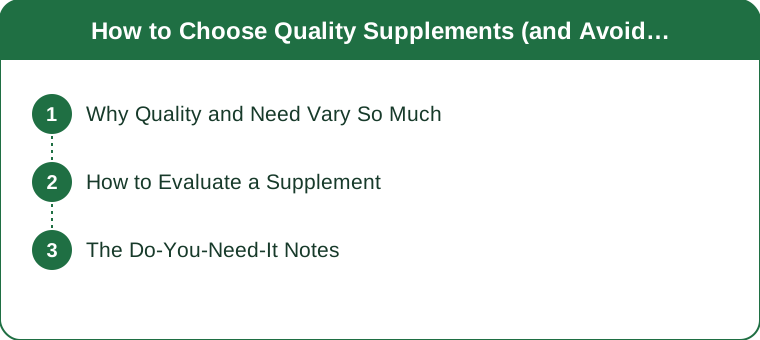
Why Quality and Need Vary So Much
The supplement reality: the the-most-are-unnecessary (the most people needing few supplements if they eat well from the actually-need logic — the food-first), the the-quality-varies-widely (the supplement quality and accuracy varying a lot between products from the actually-need logic — the not-all-equal), the the-marketing-over-evidence (the many products sold on hype rather than evidence — the mind-the-marketing), the the-need-is-individual (the actual needs depending on your diet, health and any deficiencies from the vitamin-d logic — the it-depends), the the-more-is-not-better (the megadoses being unnecessary or even harmful — the not-more-is-better), and the reframe (the supplements as mostly unnecessary and highly variable in quality — choose based on genuine need and real quality, not marketing).

How to Evaluate a Supplement
Judging quality: the the-third-party-testing (the third-party tested products for purity and accuracy from the actually-need logic — the the-quality-marker), the the-check-the-form-and-dose (the the right form and a sensible dose over megadoses from the magnesium logic — the form-and-dose), the the-look-for-evidence (the choosing supplements with real evidence behind them from the actually-need logic — the evidence-based), the the-simple-clean-ingredients (the minimal fillers and clean ingredient lists — the clean-labels), the the-reputable-brands (the trusted brands over unknown ones with big claims — the reputable-source), the the-avoid-proprietary-blends (the being wary of vague proprietary blends hiding doses — the transparency), the the-value-not-just-price (the value and quality over the cheapest or most expensive — the value-over-hype), and the the-check-interactions (the checking for interactions with medications or conditions — the safety-check).
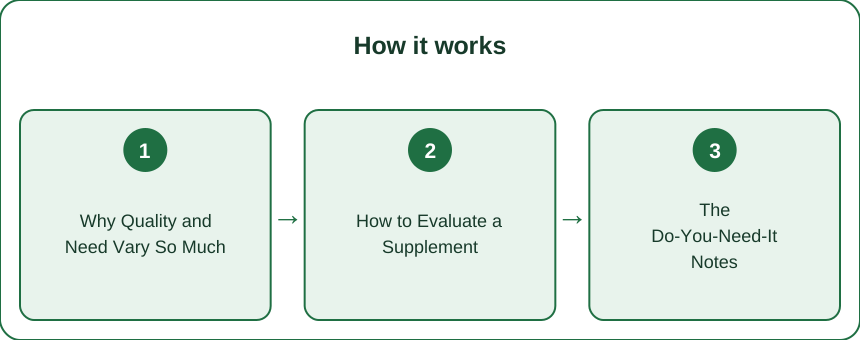
The Do-You-Need-It Notes
Deciding what you actually need: the the-food-first (the getting nutrients from food before reaching for supplements from the actually-need logic — the food-before-pills), the the-common-worthwhile-ones (the a few genuinely useful ones for some people — vitamin D, omega-3, creatine, or filling known gaps from the vitamin-d, omega-3 and creatine logic — the the-useful-few), the the-address-real-gaps (the supplementing actual deficiencies or diet gaps, like B12 on a plant-based diet — the fill-real-gaps), the the-your-diet-and-health (the needs depending on your individual diet and health from the vitamin-d logic — the individualize), the the-consult-a-professional (the getting guidance and testing for deficiencies rather than guessing from the actually-need logic — the test-do-not-guess), the the-skip-the-rest (the not wasting money on unnecessary products — the skip-the-hype), the the-timing-if-you-take-them (the taking any supplements effectively from the timing logic — the take-them-right), and the frame (the choosing supplements as a food-first, evidence-and-quality-based, individual decision — a few genuinely useful ones over an aisle of hype. Get nutrients from food first, choose third-party-tested evidence-based products for real needs, and consult a professional rather than guessing).
The supplement aisle is full of promises, and most of what is sold is either unnecessary or low quality — knowing how to evaluate a supplement and whether you even need it saves money and protects your health. Quality and need vary because most people need few supplements if they eat well, quality and accuracy vary widely, many products are sold on hype, needs are individual, and more is not better. Evaluate a supplement by looking for third-party testing, the right form and a sensible dose, real evidence, clean ingredients, reputable brands, transparency (avoid vague proprietary blends), value over price, and checking interactions. Decide what you need by getting nutrients from food first, considering the genuinely useful few (vitamin D, omega-3, creatine, or filling known gaps like B12), addressing real deficiencies, and consulting a professional rather than guessing. A few genuinely useful ones over an aisle of hype.
Keep Reading
This article is for general informational purposes only and is not medical advice. Always consult a qualified health professional for guidance specific to you.