Creatine for Women: The Most-Studied Supplement Finally Gets Asked
Creatine spent decades filed under ‘bulky gym men’ while quietly being the most-studied, best-evidenced performance supplement in existence — and the women’s research caught up: strength, recovery and intriguing brain findings, minus the mythology. The overdue briefing.

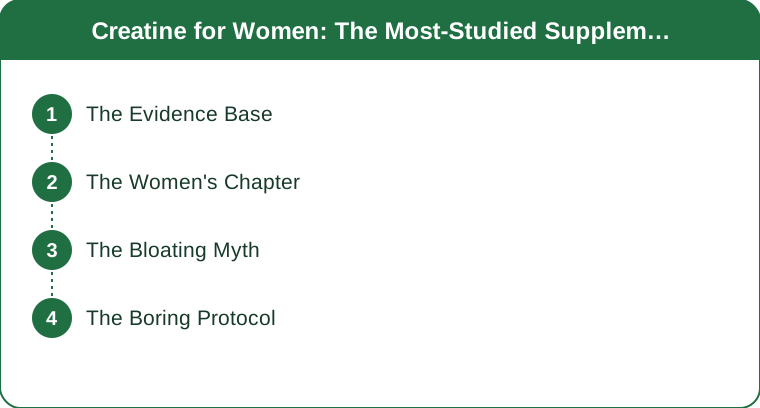
The Evidence Base
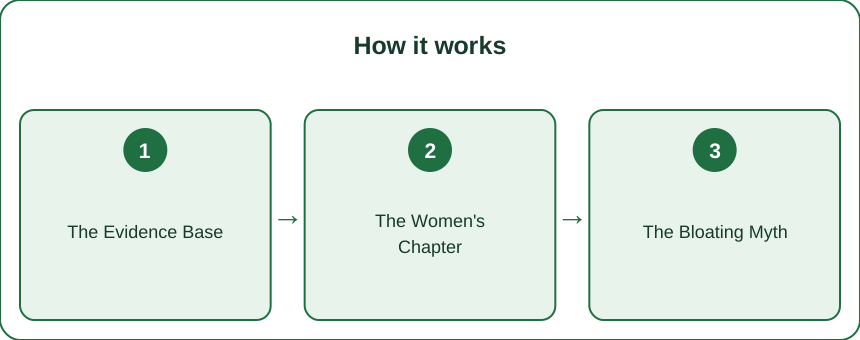
Creatine monohydrate’s file is the supplement industry’s thickest: consistently improved strength and training output, better recovery between sets, and meaningful lean-mass support alongside resistance training. It works by recharging the muscles’ quick-energy system — more good reps per session, compounding across months.
The Women’s Chapter
The catch-up research: women carry lower baseline creatine stores (supplementation may matter MORE), the strength and recovery effects replicate, and the emerging chapters — cognition support (the brain uses the same energy system; sleep-deprived-performance findings are intriguing) and studies in pregnancy-adjacent and menopausal contexts arriving steadily. The ‘for men’ filing was never science; it was marketing demographics.

The Bloating Myth
The hesitation headline addressed: creatine draws water INTO muscle cells (intracellular — the firm kind, part of the benefit), not under the skin (the puffy kind). The scale may tick up a pound of water weight in muscle; the bloat fear confuses compartments. Skipping the old ‘loading phase’ (just start at the daily dose) sidesteps the digestive grumbles entirely.
The Boring Protocol
The entire regimen: 3-5g creatine monohydrate (the plain, cheap, most-studied form — the fancy versions are markup), daily, any time, mixed into anything, consistently for weeks (saturation is the mechanism; timing is irrelevant). Hydrate normally. That’s it — the most evidence-backed supplement is also the most boring one, which is exactly the correlation this whole genre keeps teaching.
Five grams of the plain stuff, daily, forever-ish. Creatine was never the bulky-men powder — it was the best-filed supplement in the cabinet, waiting for the demographic marketing to catch up with the data.
Keep Reading
This article is for general informational purposes only and is not medical advice. Always consult a qualified health professional for guidance specific to you.